Across India's fastest-growing running hubs from the humid coastal runs of Mumbai and Navi Mumbai to the tree-shaded avenues of Bangalore, the dusty trails of Delhi and Gurugram, the hilly stretches of Pune, and the wide-open roads of Surat and Ahmedabad road runners are no longer settling for shoes that merely look the part. They want performance that survives real Indian conditions: 35°C heat, sudden downpours, broken footpaths, relentless traffic, and long training blocks that demand consistency rather than excuses. With the India running gear market reaching USD 2.4 Billion in 2024, the appetite for gear built for these exact streets is driving real change. Here is a clear, authoritative guide to what to look for in high-performance running shoes for road runners across North India, West and Central India, and South India.
Tired of gear that slows you down? Chafing, soggy fabrics, and missing pockets kill your run's momentum. At Aguante, we're runners who get it. Our high-performance activewear features moisture-wicking fabrics, ergonomic designs, and smart storage to keep you focused. Shop Now!
Road Running's Explosive Growth in India's Key Urban Centers
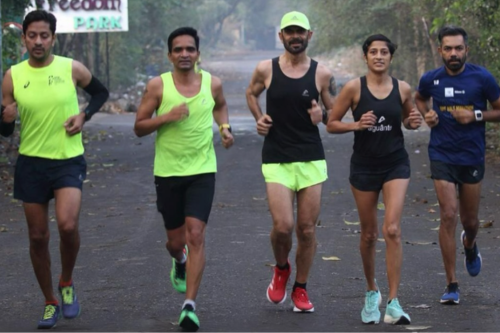
The running boom is unmistakable in North India (Delhi, Gurugram), West and Central India (Mumbai, Pune, Navi Mumbai, Surat, Ahmedabad), and South India (Bangalore, Hyderabad). Weekend group runs, corporate relay teams, and marquee events like the Tata Mumbai Marathon, TCS World 10K Bengaluru, and Airtel Delhi Half Marathon now regularly draw tens of thousands. This surge ties directly to rising health consciousness, urbanisation, and higher disposable incomes trends strongest precisely in the metropolitan regions where most serious road runners live and train.
Runners in these cities are showing up week after week because the sport delivers community, discipline, and measurable progress. Whether dodging potholes in Pune or pacing along the sea link in Mumbai, the commitment is visible everywhere. The energy is infectious, turning ordinary mornings into shared rituals that strengthen both body and resolve across Bangalore, Hyderabad, Delhi, Gurugram, Surat, and Ahmedabad alike.
The India running gear market size reached USD 2.4 Billion in 2024. The market is expected to reach USD 4.8 Billion by 2033, exhibiting a growth rate(CAGR) of 7.71% during 2025-2033.The market growth is attributed to increasing health awareness, rising participation in fitness activities, growing urbanization, expanding disposable income, popularity of recreational running, proliferation of marathons and local races, and brand endorsements by athletes, and e-commerce growth. Based on region, the market is divided into North India, West and Central India, South India, and East India.
Why Shoes Designed Abroad Often Fall Short for Indian Runners
Most international running shoes are engineered for cooler, drier climates with consistently smooth pavement. They arrive unprepared for the combination of extreme humidity, persistent heat, mixed road surfaces, and monsoon unpredictability that defines running in Mumbai, Surat, Bangalore, Hyderabad, Pune, Ahmedabad, Delhi, and Gurugram. Runners quickly discover the same problems: feet that overheat and blister, uppers that retain sweat, midsoles that feel sluggish after just a few kilometres, and outsoles that wear prematurely on abrasive concrete.
These failures are not minor inconveniences. They disrupt training plans, invite injury, and erode confidence. Runners across West and Central India and South India are now demanding designs that finally prioritise local realities. The shift is clear: performance footwear must be built for the very conditions these cities throw at you every single day.
Non-Negotiable Features for High-Performance Road Shoes in Indian Conditions
Breathability comes first. In coastal cities like Mumbai, Navi Mumbai, and Surat or humid inland mornings in Bangalore and Hyderabad engineered mesh uppers with generous ventilation and fast-drying linings keep feet significantly cooler and reduce hot-spot risks. Without this, even a moderate run turns uncomfortable within minutes. Next, prioritise cushioning that protects joints on hard urban surfaces yet returns energy efficiently; overly soft midsoles can feel unstable on Pune's rolling terrain or Ahmedabad's long straights.
Anti-chafing seamless interiors and lightly padded collars matter more than most runners realise after 90-plus minutes in Delhi's dry heat or Gurugram's dust. Reflective hits remain essential for safety during early starts and late finishes in traffic-heavy zones across all listed cities. Finally, fit is everything: toe boxes shaped for Indian foot morphology, secure midfoot lockdown, and heel cups that do not slip during acceleration. These details separate reliable daily trainers from shoes that simply look good on the shelf.
- Highly breathable, quick-drying engineered mesh for humidity in Mumbai, Surat, Bangalore, Hyderabad
- Balanced cushioning plus responsive foam for long runs on concrete in Pune, Ahmedabad, Delhi
- Durable rubber outsoles with multi-directional grip for mixed urban surfaces
- Anti-chafe linings and secure construction to eliminate distractions after 15-plus km
- Strategic reflective detailing for visibility in low-light urban runs
- Anatomically appropriate fit tested by runners who train in these same cities
Current Trends Reshaping Running Footwear Choices
E-commerce penetration is making specialised shoes accessible even in Surat and Navi Mumbai. Local race participation continues to climb, pushing demand for shoes that perform week after week in heat, dust, and rain. Most importantly, brands that design explicitly for Indian running conditions rather than merely adapting existing models are gaining serious traction.
Runners in Bangalore and Hyderabad now expect footwear that handles sudden temperature spikes and uneven sidewalks without compromise. The same expectation holds in Delhi and Gurugram, where pollution and traffic demand thoughtful visibility and durability. This practical evolution is creating better options for everyone chasing personal records on real Indian roads.
The India Apparel & Footwear Market size was valued at around USD 67.32 billion and is projected to reach USD 109 billion by 2030. Along with this, the market is estimated to grow at a CAGR of around 8.45% during the forecast period, i.e., 2025-30. The apparel and footwear sector includes the production, distribution, and sale of clothing & footwear products.
The Biggest Pain Points Indian Road Runners Face Daily
Blisters and hot spots from trapped moisture plague runners in Mumbai, Surat, and coastal Navi Mumbai. Dust and fine pollution particles accelerate wear in Delhi and Gurugram. Uneven, broken pavement punishes under-cushioned shoes in parts of Bangalore, Pune, and Hyderabad. Temperature swings from pleasant dawn to punishing mid-morning test lightweight construction in Ahmedabad.
These are not occasional annoyances they are the reasons training plans break down and injuries appear. Shoes that ignore these realities force runners to choose between comfort and performance. The encouraging reality is that better-engineered local options are steadily closing that gap for athletes across every major hub.
Real-World Wins and the Rise of India-First Innovation
A Mumbai runner training for the half-marathon switches to shoes with superior ventilation and reflective hits night runs along the sea link become safer and noticeably cooler. A Bangalore software engineer logs consistent high-kilometre weeks on Bannerghatta Road because the shoe's Indian-specific fit eliminates the mid-run readjustments that once killed momentum. Pune and Ahmedabad runners report fewer lower-leg niggles thanks to better energy-return cushioning on long Sunday efforts.
These outcomes reflect designs born from real feedback in the very cities where the shoes are used. With West and Central India leading the way and South and North India accelerating fast, the opportunity for high-quality, fairly priced, India-optimised gear has never been stronger. Runners everywhere are benefiting from this focused innovation.
What to Do Next: Practical Advice for Your Next Pair
Match the shoe to your city's dominant conditions. Prioritise maximum airflow and moisture management if you run in Mumbai, Navi Mumbai, Surat, or humid Bangalore mornings. Focus on durable, lightly cushioned responsive rides for the harder, more abrasive surfaces of Pune, Ahmedabad, Delhi, and Gurugram. Always test shoes on your actual training routes lab feel and road reality are rarely the same.
Seek brands that highlight runner-tested fits, thoughtful anti-chafe details, and honest pricing. The outlook is encouraging: as more athletes discover gear built specifically for Indian roads, runners in every major hub will have more access to shoes that truly understand exactly where, when, and how they run. Choose deliberately, train consistently, and the kilometres will reward you.
Frequently Asked Questions
What are the most important features to look for in high-performance running shoes for Indian road runners?
For Indian road runners, the top priorities are highly breathable engineered mesh uppers for humidity management, balanced cushioning with responsive foam for hard concrete surfaces, and durable rubber outsoles with multi-directional grip for mixed urban terrain. Anti-chafe seamless interiors and strategic reflective detailing are also non-negotiable especially for runners logging early morning or late evening kilometres in traffic-heavy cities like Mumbai, Delhi, Bangalore, and Pune. A secure, anatomically appropriate fit designed for Indian foot morphology ties all these features together for long-distance comfort.
Why do international running shoes often underperform for runners in Indian cities like Mumbai, Bangalore, or Delhi?
Most international running shoes are engineered for cooler, drier climates with smooth pavement conditions very different from the extreme humidity, monsoon rains, broken footpaths, and abrasive concrete found across Indian cities. As a result, runners commonly experience overheating, excessive sweat retention, premature outsole wear, and sluggish midsole response after just a few kilometres. Shoes designed specifically for Indian running conditions, rather than merely adapted from foreign models, are increasingly preferred by serious road runners across North, West, and South India.
How should I choose running shoes based on the city I train in?
Your city's climate and terrain should directly guide your shoe choice. Runners in coastal or humid cities like Mumbai, Navi Mumbai, Surat, and Bangalore should prioritise maximum airflow, quick-drying linings, and moisture management to prevent blisters and hot spots. Those training on the harder, more abrasive roads of Delhi, Gurugram, Pune, or Ahmedabad should focus on durable outsoles and lightly cushioned, energy-returning midsoles that protect joints over long distances. Always test shoes on your actual training routes, as real-road performance can differ significantly from how a shoe feels in-store.
Disclaimer: The above helpful resources content contains personal opinions and experiences. The information provided is for general knowledge and does not constitute professional advice.
You may also be interested in: Why Choosing High-Performance Gear Is Crucial for Marathon
Tired of gear that slows you down? Chafing, soggy fabrics, and missing pockets kill your run's momentum. At Aguante, we're runners who get it. Our high-performance activewear features moisture-wicking fabrics, ergonomic designs, and smart storage to keep you focused. Shop Now!
Powered by flareAI.co