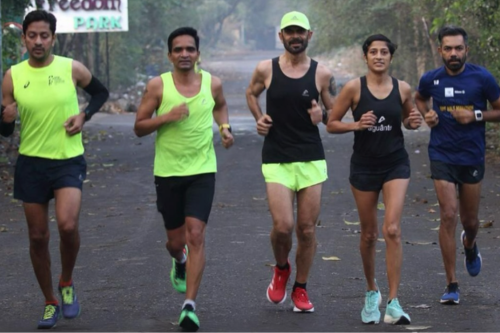























Organizing inclusive races for runners of all abilities has become one of the most important yet complex responsibilities for modern race organizers, running clubs, and community fitness leaders. As participation in community running events grows across cities such as Bangalore, Hyderabad, Mumbai, Pune, Navi Mumbai, Delhi, Gurugram, Surat, and Ahmedabad, expectations have shifted beyond simply hosting a timed race. Today's participants expect accessible running events that welcome beginners, competitive athletes, senior runners, and differently-abled participants on equal footing. Creating this kind of environment requires thoughtful planning across accessibility, safety, communication, and fairness while ensuring that the experience remains enjoyable and motivating for everyone involved.
Tired of gear that slows you down? Chafing, soggy fabrics, and missing pockets kill your run's momentum. At Aguante, we're runners who get it. Our high-performance activewear features moisture-wicking fabrics, ergonomic designs, and smart storage to keep you focused. Shop Now!
Understanding Inclusive Running Races in Modern Communities
Inclusive running races are designed to remove barriers that traditionally prevent participation, whether those barriers are physical, logistical, or psychological. In cities like Delhi and Mumbai, community running groups have already begun experimenting with mixed-ability formats, where participants can choose between timed competitive categories, non-competitive fun runs, and assisted participation categories for runners with disabilities. The goal is not only to increase participation but also to foster a sense of shared achievement among diverse groups of runners.
However, building truly inclusive running races requires more than adding separate categories. Organizers must rethink race structure, from registration systems to finish line support. In rapidly growing urban centers such as Bengaluru and Pune, race organizers often face pressure to accommodate large crowds while maintaining accessibility standards. This includes designing race packs, instructions, and signage that are understandable for first-time participants and accessible to individuals with visual or cognitive impairments. The challenge lies in balancing scalability with personalization, ensuring that every runner feels seen and supported regardless of ability level.
Accessibility and Route Design Challenges in Indian Cities
One of the most significant challenges in organizing accessible running events is designing race routes that are physically inclusive. Cities like Hyderabad, Gurugram, and Navi Mumbai present unique urban constraints such as uneven sidewalks, heavy traffic intersections, and limited wheelchair-friendly pathways. While large marathons in Delhi NCR or Mumbai may secure main road closures, smaller community races often struggle to guarantee uninterrupted and smooth terrain for all participants.
In addition to physical infrastructure, environmental conditions also play a role. Heat, air quality variations, and unpredictable congestion patterns in cities like Ahmedabad and Surat can disproportionately affect runners with mobility challenges or medical conditions. Organizers must therefore evaluate routes not just for distance accuracy, but for safety consistency across all ability levels. This includes ensuring adequate hydration points, shaded rest areas, and clearly marked accessibility lanes where needed. The absence of standardized accessibility infrastructure across many urban routes makes it difficult to deliver consistent experiences, highlighting the need for stronger collaboration between municipal authorities and race organizers. For example, the Delhi Urban Arts Commission has been working on improving pedestrian and accessibility standards in public spaces.
Safety, Medical Support, and Emergency Preparedness
Safety planning is one of the most critical aspects of organizing inclusive races, especially when accommodating runners with varying physical capabilities. In large community running events across Mumbai and Delhi, medical incidents can range from dehydration and fatigue to more complex situations involving pre-existing health conditions. Ensuring that medical support teams are strategically placed along the route is essential, but inclusive races require an even more nuanced approach.
For support for differently-abled runners, organizers must consider specialized medical readiness, including wheelchair assistance teams, trained volunteers for guiding visually impaired runners, and clearly marked emergency response stations. Organizations like Guide Runners India provide trained volunteers for visually impaired participants. Cities like Pune and Bengaluru have seen growing collaboration between local hospitals and race events to provide rapid-response medical units. However, one of the ongoing race planning challenges is ensuring that medical staff are trained not only in emergency care but also in disability-sensitive communication and support. This combination of physical readiness and empathetic engagement is essential for building trust among participants and ensuring that inclusive races are genuinely safe for all.
Pacing, Fairness, and Competitive Balance Across Ability Levels
One of the most complex aspects of inclusive race design is maintaining fairness while accommodating different running abilities. Traditional timed races are inherently structured around speed, but inclusive marathon tips increasingly emphasize participation-based success metrics. In cities like Hyderabad and Gurugram, organizers are experimenting with staggered start times, grouped pacing zones, and mixed-category waves to reduce congestion and improve experience quality.
However, balancing competitiveness and inclusivity can be challenging. Faster runners may feel restricted in overly segmented events, while beginners may feel pressured in mixed environments. In Ahmedabad and Bengaluru, some community races have introduced dual-track formats where competitive runners are timed separately from recreational participants, allowing both groups to achieve their goals without conflict. The key challenge lies in designing systems that preserve the spirit of competition while ensuring that slower runners are not marginalized or discouraged. Fairness in inclusive running races is less about identical treatment and more about equitable experience design tailored to diverse needs.
Communication and Participant Experience Design
Effective communication plays a vital role in ensuring the success of running event accessibility. Many inclusivity challenges arise not from physical limitations but from unclear instructions, poorly structured registration systems, or lack of pre-race guidance. In large-scale community running events across Delhi, Mumbai, and Pune, organizers often struggle to communicate route changes, accessibility features, and safety protocols in a way that is easy to understand for all participants.
Inclusive communication strategies must account for different literacy levels, language preferences, and accessibility needs. This includes using visual aids, multilingual instructions, and simplified race-day guides. In cities like Navi Mumbai and Surat, where participation from diverse demographic groups is increasing, race organizers are increasingly adopting mobile-first communication tools to ensure real-time updates reach all participants. A well-designed communication strategy reduces confusion, improves safety, and enhances the overall experience, making participants feel more confident and supported throughout the event lifecycle.
Volunteer Training and Community Coordination
Volunteers are the backbone of inclusive running events, especially when it comes to managing diverse participant needs. In cities like Bengaluru and Delhi, large-scale races depend heavily on volunteer networks to manage hydration stations, guide runners along routes, and assist participants requiring additional support. However, effective inclusion requires more than just volunteer availability it requires specialized training focused on empathy, accessibility awareness, and situational responsiveness.
Training volunteers for community running events involves preparing them to assist differently-abled participants, manage crowd flow, and respond calmly to unexpected challenges. In Hyderabad and Pune, some race organizers have begun implementing pre-race workshops where volunteers are educated on disability etiquette, communication techniques, and emergency procedures. This ensures that support is not only operational but also respectful and empowering. The challenge remains scaling this level of training consistently across all events, especially as participation continues to grow in both tier-one and emerging urban centers like Ahmedabad and Surat.
Technology and Innovation in Inclusive Race Management
Technology is increasingly playing a central role in addressing race planning challenges and improving inclusivity. Timing systems, mobile applications, and GPS tracking tools allow organizers to monitor participant progress and adjust support dynamically. In cities like Mumbai and Bengaluru, race organizers are using digital registration platforms that allow participants to declare accessibility requirements in advance, enabling better preparation on race day.
Additionally, wearable tracking devices and app-based navigation systems are helping improve safety and pacing for runners of all abilities. These tools are particularly useful in large events across Delhi NCR, where participant density can make on-ground coordination difficult. However, technology alone cannot solve inclusivity challenges. It must be paired with human-centered design thinking that prioritizes empathy, accessibility, and real-world usability. When used effectively, technology enhances transparency, reduces logistical friction, and allows organizers to focus more on creating meaningful, inclusive experiences for all participants.
Organizing inclusive races for runners of all abilities is a multidimensional challenge that requires careful attention to accessibility, safety, communication, fairness, and volunteer coordination. As cities across India continue to embrace community fitness culture, the demand for more inclusive running races and accessible running events will only grow. By addressing these challenges with thoughtful planning and a participant-first mindset, race organizers can create environments where every runner regardless of ability feels empowered to participate, compete, and belong.
Frequently Asked Questions
What are the biggest challenges in organizing inclusive running races?
The main challenges include designing physically accessible routes, ensuring specialized medical support, and creating fair pacing systems for mixed-ability participants. Urban infrastructure in cities like Hyderabad and Gurugram often presents obstacles such as uneven sidewalks and limited wheelchair-friendly pathways. Organizers must also address communication barriers and provide multilingual, accessibility-conscious instructions to serve diverse participant groups.
How can race organizers ensure safety for differently-abled runners?
Safety for differently-abled runners requires strategically placed medical support teams, wheelchair assistance crews, and trained guides for visually impaired participants. Medical staff should be equipped not only with emergency care skills but also with disability-sensitive communication training. Collaborations with local hospitals and organizations like Guide Runners India have proven effective in providing rapid-response medical units at community running events.
How does technology help improve accessibility and inclusivity at running events?
Technology plays a growing role through digital registration platforms that allow participants to declare accessibility needs in advance, enabling organizers to prepare targeted support. GPS tracking, wearable devices, and mobile apps help monitor runner progress and improve real-time safety across large events. However, technology works best when paired with human-centered design thinking that prioritizes empathy and real-world usability for all ability levels.
Disclaimer: The above helpful resources content contains personal opinions and experiences. The information provided is for general knowledge and does not constitute professional advice.
You may also be interested in: Bangalore Emerges as India's Hub for Community Running Events
Tired of gear that slows you down? Chafing, soggy fabrics, and missing pockets kill your run's momentum. At Aguante, we're runners who get it. Our high-performance activewear features moisture-wicking fabrics, ergonomic designs, and smart storage to keep you focused. Shop Now!
Powered by flareAI.co